
Description
Hydraulic braking systems rely on Pascal’s Law, which states that fluid in a confined space transmits pressure evenly in all directions. This principle is the foundation of modern brakes, allowing fluid to transfer force from the pedal to the wheels.
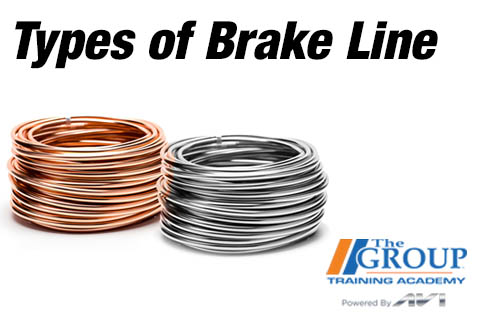
Brake lines come in two main types: hard lines and flexible lines. Hard lines, typically steel or steel-copper Bundy lines, run the length of the vehicle, providing a durable, enclosed path for fluid. Flexible lines take over at the wheels, connecting hard lines to calipers or wheel cylinders. Made of reinforced rubber, they handle high pressures while allowing suspension movement.
Both types require proper fittings—most commonly bubble or double inverted flares—to ensure safety under extreme pressures. Pre-made hard and flexible lines are recommended for convenience and reliability, while DIY fabrication should only be attempted with the right tools and protectors. Quality lines keep braking systems safe and effective.